Tuesday, April 16, 2019

Beyond a Unified Germany - Consumerism and Ecology

Jon Whitman - Week 14

     This week's reading and discussion focused closely on the reunification process of Germany in the aftermath of foreign occupation. More importantly, the devaluing process that East Germany was subjected to and how that undermined the very identities of East German citizens. Now, East German items have been commodified through the term Ostalgie, which is effectively profiting off the remnants of the once existing East German society, culture, norms, and commercial items. East Germans under the socialist system were used to much of the same things and, as a result, this market is doing very well for those who want to experience the familiarity of their homes and bring back some comfort to their origins. 


  Speaking of homes...


The Adaptable Heimat

Heimat: a term soon to be forgotten
     Upon first review of this video and its corresponding image, it would seem that it was made with the intention of the preservation of nature. However, after translating the blog post, it would appear that this is just a traditional telling of the term Heimat. But this alerted me to the distinct adaptability of Heimat and the reason why this word is so integral to German society. According to this video, what makes Germany a beautiful home for Norbert Bass are its lush forests, powerful mountains, stark snowscapes, animals and more. Heimat has become ecological, Germany is not only home because of its industrialized, Western, capitalistic, consumerist culture. Rather, can be seen as home because of what has existed for thousands of years. It is a result of this culture that the term Heimat, as the image denotes, is soon to be forgotten. Not literally of course, but in terms of the natural world a complete erasure of nature for the pursuit of capital gain is an increasingly looming threat. I find it both compelling and slightly comedic that the director of this composition chose a worn elderly man to portray Heimat, something I interpreted as a video of a dying landscape in need of help. 

Germans themselves might also be confused


The Growing Global Contemporary Ecologic Crisis
The dried Dreisam River | Click the here to access the article
     Many aspects of Germany are being impacted by climate change. The image to the right is just one of many examples of how rising global temperatures are starting to damage local wildlife populations and completely alter the way Germans and visitors experience the natural German world. 
     Climate change is a (hu)man-made issue that has been enacted and normalized in the everyday lives of all of Western civilization. The challenges of climate change stems from the life practices and comfort we as an urbanized society can, foreseeably, no longer live without. Germany is no exception to this. In the aftermath of the second world war, Germany's Western occupation experienced intense industrializing and, most importantly, Westernization. That is, a Western capitalistic culture. Capitalism has historically demonstrated its ability to consume cultures and completely alter the way those societies live. In this case, Germany has taken a tight hold of capitalism while still maintaining elements of socialism. Known as a socialist market economy, the German government combines the free market system with social policies for fair competition between the market and welfare state. However, despite not being entirely capitalistic (on paper that is) the German people still promote a distinctly Western form of identity, interested in consumption and capital gain. 
     In the same way the former East Germany is vanishing, so too is the natural world. Despite the environmental challenges Germany may be facing, the government and much of their people are in support of environmental efforts to preserve as much of the natural land as is possible. In 2002, regulations were drafted to decrease the urbanization of Germany by roughly 77%. However, this was met with backlash from companies and free market supporters who argue against land restrictions. Changes like these are important and help limit the dangers of urban sprawl (the unstoppable expansion of urban areas), but as the definition notes, although slowed down the expansion is still seemingly unstoppable. Instead, the focus needs to turn to measurable differences in daily practice, consumption, and knowledge of and contact with the natural world. Without those changes, Germany and the rest of the world is in danger of irreversibly destroying the natural landscape of the planet. 


Further Avenues to Explore
This blog post covers the topic very briefly, if wanting to learn more about the ecological crisis as it pertains to Germany, religion, and more, here are a few sources to get you started. 

The German Music Scene in the Years Surrounding Reunification

The Evolution of the Music Industry in a Reunified Germany

                                             Image result for berlin wall falling
After the fall of the Berlin Wall on November 9, 1989, West and East Germany began to tackle the massive problems that needed to be addressed if reunification was to happen. Healthcare, money, education, even transportation were all revamped and ideas of how to integrate two nations into one were discussed. Considering the time and problems, it was amazing that the two Germany's were reunited in a relatively short period of time, on October 3, 1990. This massive political and social change undoubtedly left people reeling, and it was a struggle to cope with the emotions and circumstances that many found themselves in. Something that I wanted to focus on however, was the vibrant and innovative music scene that really exploded in Germany during this time. Rock, punk, goth, and even smaller scenes like trance all found traction in this new Germany, and people were using music as a way to express themselves in this new world.

Image result for rammstein
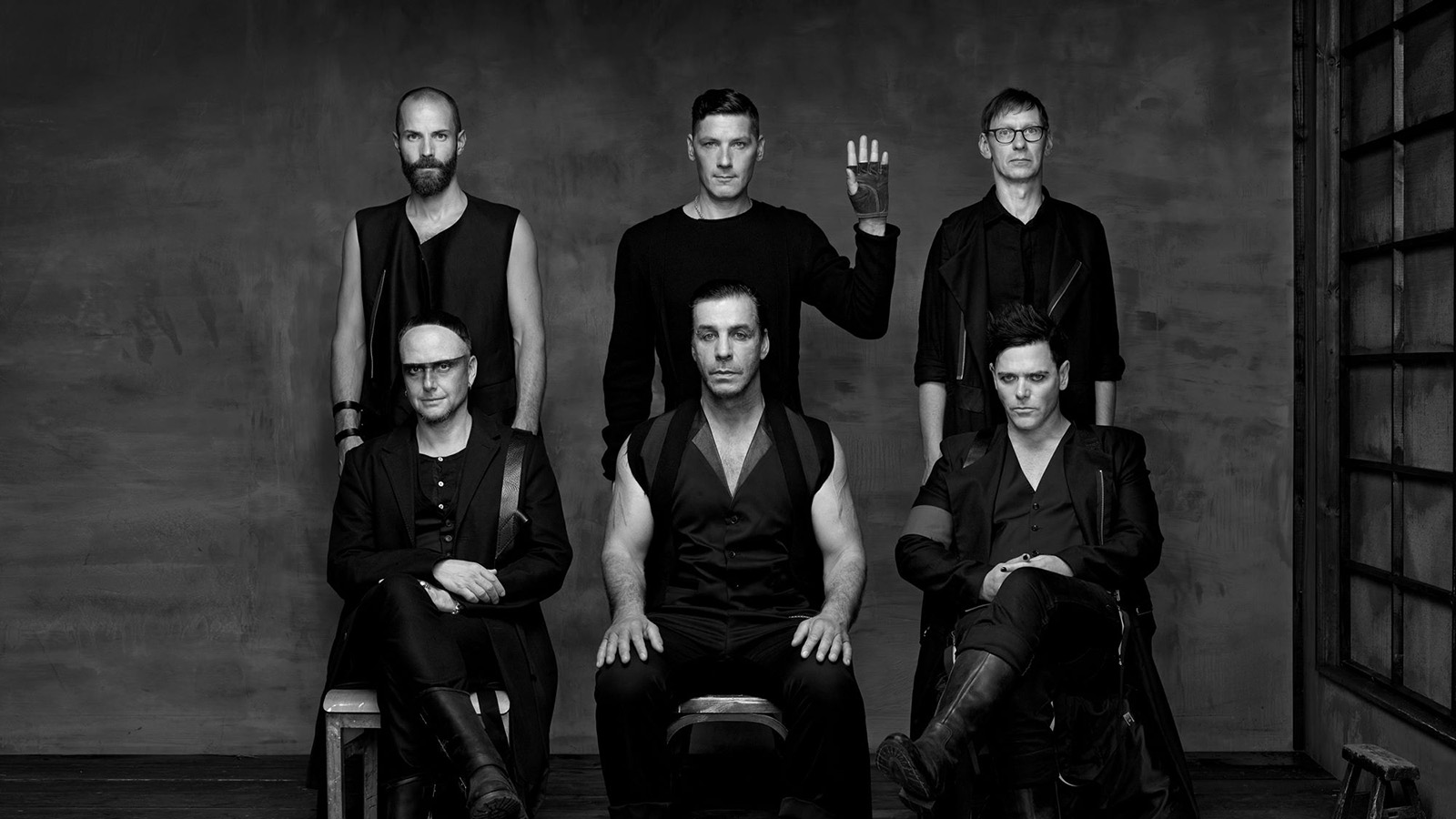
Rammstein: A famous German rock group that is still popular today
Several artists used music to show their euphoria at reunification, or in some cases their criticism. Die Ärzte's song "Hurra" is a critique on the reunification and mocks the governmental policies and decisions that were made up until the song's release in 1995. Besides this though, the vast majority of bands and music were optimistic for the future of Germany, and there were dozens of hits during this time. 

Interestingly, Synthpop and Eurodance became extremely popular during the late 1980's and early 1990's, corresponding with reunification and probably that many former East Germans were now able to access all of the Western music that they were denied before. Culture Beat's "Mr. Vain" (1993), Fun Factory's "Close To You" (1993), and many other groups of these types came out of Germany in the 80's and 90's. I think that many of these would never have been possible if it were not for the reunification. Many different styles from the East and West came together, artists had different inspirations, and even the bands themselves were composed of people from all over Germany and even Europe
Loveparade Germany logo.jpg
Add caption
.
Aside from these types of music that were very popular in Germany, Trance music was something that was actually invented in Germany, specifically during the reunification period. A combination of British new age music and the German techno scene, this style rapidly became very popular with the rest of Europe. This type of music branched into psychedelics and hypnosis, and beats can often be repetitive and layered. A popular music festival at the time was the "Love Parade" which started in Berlin in 1989. See also Sequel Bass - The Third Chapter (1997)

I think that the German reunification made all of this music possible. This expression and experimentation by Germans was a result of the reunification and all of the societal changes that came with it. Groups were made up of former East and West Germans, Berlin especially became a staging ground for many bands, and influences from around the world were able to impact Germans. These years surrounding reunification were for the development of not only German pop culture, but also Germany as a whole, and the images and art that made it so that the rest of the world could see what they had achieved.

Brendan Totzke

Tuesday, April 9, 2019

Deutsche Demokratische Republik: Religion

Religion in West Germany

Introduction

This week we focused on the German Democratic Republic and what life was like under its government. The film The Lives of Others gave great perspective on how surveilled the population was. The great lengths that the Stasi went in order to gather information about people who could possibly be against the state was astounding. Then, when we were together we looked at documents showing how a person was categorized based upon their appearance. A simple hairstyle and favorite type a music was enough to make a person an automatic threat to the government. I did find it fascinating though that this film, as well as the next film we watched, Goodbye, Lenin!, touched base on religion. I found this interesting because religion is typically used to define people even more than a hairstyle or music preference would. For this reason. I wanted to focus on religion during this time.

Religion

It is typical when talking about European history that religion is an important topic. Religion has been the driving force for so many conflicts throughout time, but it also has a way to bring groups of people together. The holocaust involved the killing of millions upon millions of different groups of people, but most notably those of Jewish faith. Though East Germany was not directly an extension of Nazi Germany, its citizens were controlled and monitored in similar fashions. Thus, examining the role in which religion played in the lives of the citizens is crucial.

At the start of East Germany, a very large portion of the population was religious. At the beginning of the German Democratic Republic 85% of the population was Protestant, 10% was Catholic, and only 5% were unaffiliated. These numbers would be very comparable to West Germany at the time. Yet, by the very end of the German Democratic Republic Protestantism was down to 25%, Catholic 5%, and unaffiliated was all the way up to 70%. Initially, the new government made no attempt to ban religion, they instead tried to use it to promote their agenda. In the mid 50's, the rising tension of the Cold War changed this. This is when East Germany adopted state atheism which is the incorporation of atheism into political regimes, especially concerning the Soviet Union.  While most citizens became disaffiliated, the stance of the church also changed in this time. Before, the church was much more hostile to the new socialist party because they did not support the church, but they then shifted to develop into a more neutral stance accommodating conditional loyalty to the state. This then led to the relation between the two to becoming more neutral. It is interesting to think though that if so many Eastern Germans hadn't become atheist, would the state still have this neutrality with the church or would they still push further for atheism. 

Click for a short video about religion in Germany today.

-Chloe Soncrant 

The German Democratic Republic


                                                        INTRODUCTION

This week's class discussion focused on the elements of society within the German Democratic Republic (Deutsche Demokratische Republik) and how it affected the citizens during and after German Reunification (Deutsche Wiedervereinigung). Perhaps one of the most important concepts that epitomized East German society was the idea of Schein und Sein, fantasy versus reality, and the ways this manifested from economics to art and culture. The GDR as a historical event was one that impacted thousands of lives and played a pivotal role in the global stage. Amongst the topics up for debate was the Socialist Unity Party, the benefits and setbacks of communist ideals, and the restriction of freedom of expression under political pressure. 


 SCHEIN UND SEIN 
THE IMPLICATIONS FOR A COMMUNIST REGIME

This topic, translated as fantasy and reality, makes a definitive appearance in the every day lives of citizens living in East Germany. Under the Socialist Unity Party (Sozialistische Einheitspartei Deutschlands), every facet of life was under strict control of the German communists, from businesses to art to home life. Everything was nationalized, and privately owned companies were a rarity. This often resulted in poor production quality, economic instability, and political turmoil. To the outside world, East Germans were struggling internally while trying to maintain the facade of an efficient, productive and overall happy society. For example, the wait time to receive a telephone or a Trabant car was around 10 years. In addition, since food supplies were in demand and in short supply, companies resorted to making cheaper and lower quality alternatives. In a more positive light however, health care, transportation and education were universally accessible for every citizen, and an environment of community and fraternization was encouraged. 


There is no doubt however, that East Germany was struggling to keep up with the demands of its people as well as the economic prosperity experienced by the West. Not only this, but borders were strictly enforced to ensure no one was crossing and emigrating out of the country. As portrayed by the film Goodbye Lenin!, East and West Germany had its differences, both culturally and politically. What struck me most however, was the idea of fantasy and reality, what Alex Kerner wanted an ideal communist society would be and what it was actually becoming in an effort to shield his mother from another fatal heart attack. I felt it was a moving film because it applied this concept so well and executed it with heart. I feel it is still applicable today, especially the themes on what we envisioned a happier society to be versus what it is in reality. The idea of community was fading and consumer culture was ready to take its place. 
 
The fall of the Berlin Wall was another historic event that was discussed in class and the aftermath of the event was also very important. In today's America, what I see are walls being built, not being torn down. In such a contentious time in American history, we are seeing racial and religious groups being pitted against the other in acts of hatred, violence and bigotry, and this is only exacerbated by sensationalist news hoping to divide and antagonize polarizing ends of a spectrum. Similarly, East and West Berliners held conflicting viewpoints about the other, stereotyping the other and not coming to terms in friendlier ways. These views were still held during German reunification, but the fact that Germany was able to come together was still a good starting point. East and West Germans gradually began to assimilate to the other's ways of life. Although we are seeing the same events happen with walls and divides being made, we can make the effort to find connections across the human race.


Translated to: "Friendship Forever" 
By: Chyenne Tran

SOURCES:

https://www.history.com/topics/cold-war/berlin-wall

http://www.newworldencyclopedia.org/entry/East_Germany

https://www.encyclopedia.com/history/encyclopedias-almanacs-transcripts-and-maps/socialist-unity-party-germany

https://www.theguardian.com/culture/2003/jul/25/artsfeatures.dvdreviews

Monday, April 1, 2019

Social Change Movements in the 1960's

In class this week, we discussed the 68 Student Movement that took hold in Germany in the 1960's. As students began to come to terms with Germany's past, they began to criticize the current social practices, as well as critique previous generations that came before them. Upon realizing the issues that were present, they demanded a change. They insisted that Germany's Nazi past, as well as their parents', be confronted and dealt with. Students also called for a change in the society to become more democratic and stopped the planned German legislation. They also called for a reform in the school curriculum during this time. Additionally, they aimed to reduce the right-wing press and its abuse of the freedom of press. The final thing that they fought for was to stop the Vietnam war and improve the conditions in the Third World.

Image result for 1960s a time of protest
However, as mentioned in class as well, German students were not the only ones protesting during this time. During the 1960's social change movements erupted globally, and "fifty six countries and governments had to face thousands of students acting as rebels". As many of us know about the many movements that occurred within the United States during this time (the Civil Rights Movement, the Student Movement, the anti-Vietnam Movement, the Women's Movement, the Gay Rights Movement, the Environmental Movement-just to name a few) this post will be focused on the protests that occurred in France during this time. With that being said, if you would like more information on the movements that occurred in America, this crash course video describes them wonderfully. 
 https://www.youtube.com/watch?v=lkXFb1sMa38


Image result for france 1960s protests
Image result for france 1960s protestsIn 1968, students in France lead a protest that began on May 3 and ended on June 12. This protest began on May 3 when students began protesting for educational reform at the Sorbonne, the most celebrated college of the University of Paris, that had to be broken up by police. In doing so, several hundred students were arrested and dozens were left injured. Following this, the courses at the Sorbonne were suspended, but this only sparked more protests. On May 6, students took to the streets of the university district of Paris, and  they were shut down by the police, resulting in hundreds of injuries. This was followed by another protest on May 10 where students set up barricades in the streets to riot; this one resulted in nearly 400 hospitalizations, more than half of which were police officers. After this, union leaders started planning strikes in support of the students, leading to the reopening of the school on May 13. Instead of classes reopening on this day however, students occupied the building and converted it into a commune while striking workers and students continued to protest in the streets of Paris. This inspired other French universities, as well as other members of the workforce to seek change and resulted in the protest of several million workers, which left France paralyzed. Then on the evening of May 24, the worst fighting seen during the entire May crisis broke out when revolutionary students temporarily seized the Paris Stock Exchange and raised a communist red flag over the building before trying to set it on fire. In the following days, the students lost the support of many union leaders as the Prime Minister began negotiating with them, but this still did not successfully end the strike. Things finally began to settle down when President de Gaulle announced the call for national elections as well as his plan to dissolve the National Assembly, but students protests continued up until June 12 when they were banned. Although these students were later evicted from the Sorbonne, in the aftermath of the May events, the government made a series of concessions, such as higher wages and improved working conditions for workers, as well as an education reform bill that intended to modernize higher education. 

Art work in France during the 1960's

Image result for france 1960s protests artImage result for france 1960s protests artImage result for france 1960s protests art
"free information"              "be young and shut up"         "beauty is in the streets"

The famous "baby boom" that occurred in the 1940's resulted in a dramatic percentage increase of young people in the 1960's, and they truly took the world by storm. As the younger populations began analyzing their own countries, transformations occurred globally, not only in Germany, America, and France as mentioned, but in other countries such as Japan, Denmark, Italy, Britain, as well as many Third World countries. These movements were intense and violent as students created serious disruptions within their societies in an effort to alter their political systems. 

Image result for nazi flagAlso, as an additional tidbit of information that I found out last week before class, the Reimann family, reportedly one of the richest families in Germany that owns famous consumer brands like Krispy Kreme doughnuts, Keurig, Dr. Pepper, and Panera, came forth this week and admitted to having a family history of Nazi ties. After conducting a 3-year investigation, it was found that not only did the family use Russian civilians and French prisoners of war as forced labor in the family factories during the war, but they also were anti-Semites and avowed supporters of Hitler, even donating to his paramilitary SS force as early as 1931. The family was very apologetic when they announced this last week and said that they "were ashamed and white as sheets." They mentioned that " is nothing to gloss over" and that "these crimes [were] disgusting," before vowing to donate $11 million to a yet-undisclosed charity because of this discovery. I thought it was really interesting how this could be directly applied to our class discussion on how difficult confronting familial Nazi ties was for the youth during this time. 

By: Jacquelyn Rueff

Sources
http://www.lessonsite.com/archivepages/historyoftheworld/lesson31/protests60s.htm
https://www.history.com/this-day-in-history/protests-mount-in-france
https://www.e-ir.info/2011/07/02/was-the-european-student-movement-of-the-1960s-a-global-phenomenon/
https://www.cnn.com/2019/03/25/business/krispy-kreme-nazi-ties/index.html